صحافة الكترونية مرخصة وزارة الاعلام ترخيص رقم 366-2019

صحافة الكترونية مرخصة وزارة الاعلام ترخيص رقم 366-2019
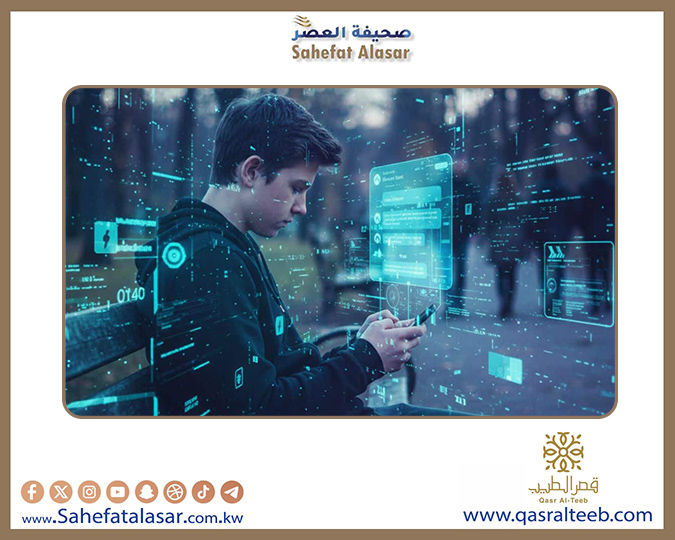
With the rapid spread of artificial intelligence, its effects are no longer limited to the fields of work, education, and health, but have extended to human relationships and the nature of social communication. AI has the potential to reshape the nature of social interactions, especially in adolescents, as it can hinder the development of the basic social skills they need to build real relationships.
While many teens find chatbots a safe outlet for expression and emotional support, experts warn that this type of interaction could gradually weaken the new generation's ability to build real-world relationships based on mutual and human empathy.
Chatting with intelligent bots can get users used to interactions that are only about themselves, and reduce the need for genuine human connection.
Changes in teens
' technology use patterns Studies have
shown that teens have been tending for years to reduce face-to-face communication, preferring to interact via social media or digital messaging. Research has documented a decrease in time for in-person communication since 2019. In a 2024 Pew Research survey, nearly half of teens said they almost always use social media to connect with others. While these digital interactions take place with real people, communication with AI is radically different, removing the human element altogether, and humans communicating with a machine.
Data from Common Sense Media showed that 72% of teens interacted with an AI robot at least once a month, and more than half interacted with it regularly, at least a few times a month. 33% of them indicated that they use these robots for a variety of social purposes, including
training in conversational techniques (18%).
Access to psychological support (12%).
Role-playing (12%).
Chat as friends (9%).
It's
easy to see why teens are attracted to AI as a source of emotional support, as it promises them a tireless companion that is always available, not critical or rejected, and shows unlimited understanding. Some studies also suggest that AI may appear more empathetic than humans in some situations.